Multi-Agent Systems
Design coordinated teams of specialized agents that plan, reason, and execute together using A2A protocols, shared memory, and role-based responsibilities.
Custom agentic workflows and A2A architectures, built on your proprietary data. We orchestrate — You scale.
From idea to agent architecture in one call.
lead-gen-orchestrator
Planner
Decomposed objective → 4 tasks
Research
GPT-4o miniEnriched 38 accounts · CRM + web
Reasoning
ClaudeScored intent → 12 high-fit leads
Guardrail
PII filter · policy check passed
Outreach
Personalized sequences drafted
Guardrails on · human-in-the-loop
12 leads qualifiedAI Capabilities
Production agent systems, model strategy, data privacy, and governed automation designed around the way your team already works.
Design coordinated teams of specialized agents that plan, reason, and execute together using A2A protocols, shared memory, and role-based responsibilities.
Native integrations with frontier foundation models — OpenAI, Anthropic, Google, Meta, and open-weight models — routed intelligently per task.
We know which model to use where and when. We balance accuracy, latency, cost, and privacy so the right LLM powers each step of your workflow.
Production-grade guardrails: input/output filtering, policy enforcement, evals, red-teaming, and observability across every agent action.
Generative, agent-driven interfaces that render dynamically based on user intent and live system state — beyond static screens.
Tenant isolation, encrypted retrieval, and zero-leak architectures so agents reason over your sensitive data without ever training public models.
Use Cases
Each outcome below is a team of specialized agents — researching, reasoning, and executing together through A2A — orchestrated to run a complete enterprise & GTM workflow end-to-end.
lead-qualification-orchestrator
Orchestration path
Planner
Research
Scoring
Guardrail
Outreach
Guardrails on · CRM synced
12 leads qualifiedIntegration Freedom
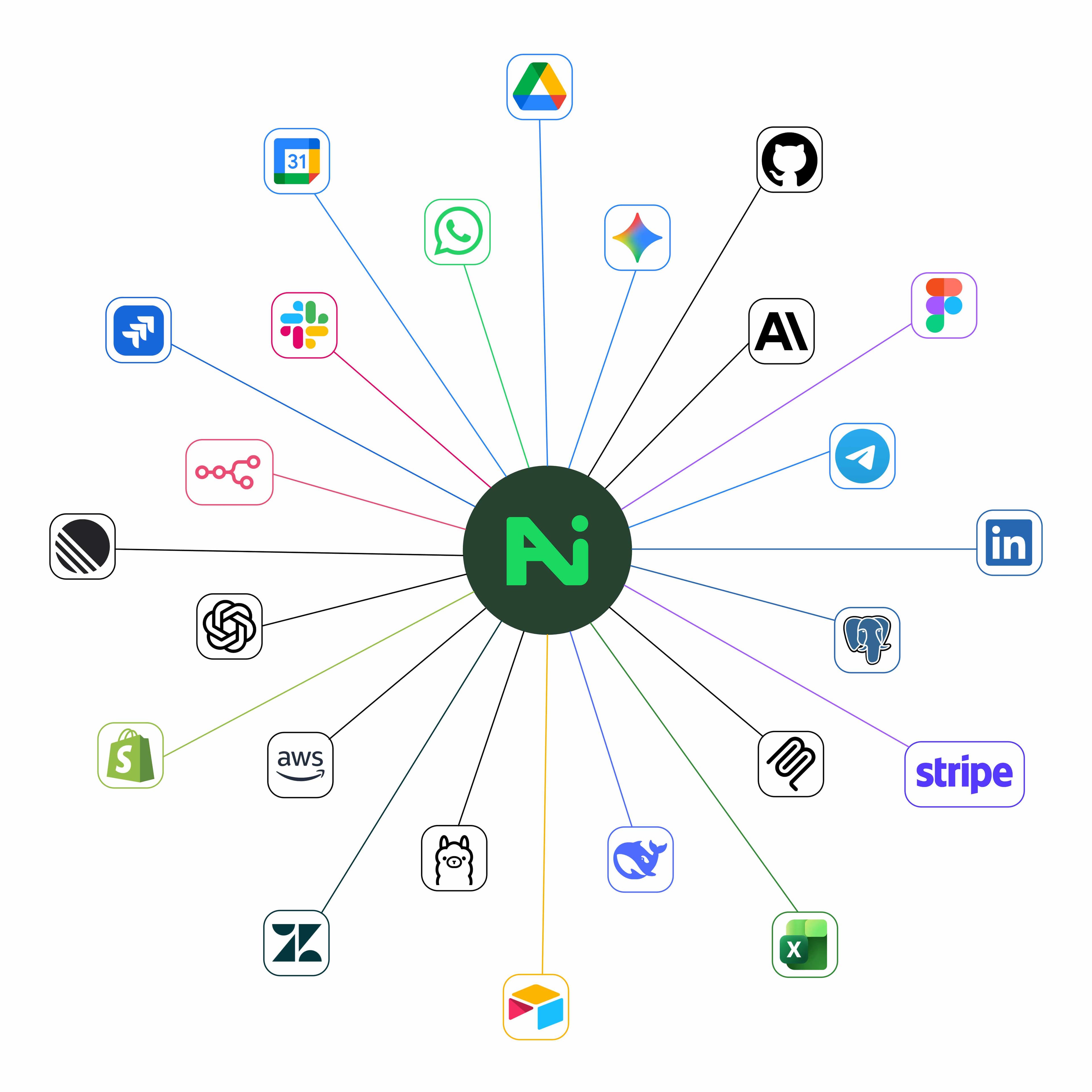
Your CRM, support desk, issue tracker, files, calendar, chat, and model preferences can stay where they are. We connect them into a governed agent layer so automation works inside the tools and workflows your team already trusts.
Implementation Model
Whether your process is manual, fragmented, or ready to be designed from scratch, we turn it into a well-architected agent workflow with the right tools, data, evaluation, guardrails, and production feedback loops built in.
Map — Architect — Connect — Evaluate — Deploy — Feedback
Identify the GTM process, decision points, handoffs, data sources, and places where humans stay in control.
Define the planner, researcher, analyst, guardrail, and execution agents that make the workflow reliable.
Wire proprietary data, CRM, outreach, calendar, analytics, knowledge bases, and approval systems into the agent layer.
Add policies, evals, logging, observability, and human approval paths before agents touch production workflows.
Launch the workflow, monitor results, tighten prompts and tools, and compound what the system learns over time.
Guardrails & Data Privacy
Isolated tenants, encrypted retrieval, scoped tool use, and policy-enforced guardrails. Your proprietary data stays under your control and is never used to train public models, with on-prem and private-model deployments available for sensitive workloads.
Secure Agent
Runtime
Private Knowledge
CRM, call notes, strategy docs, and product data stay in your tenant.
Encrypted Retrieval
Agents pull only the context needed for the task through scoped retrieval.
Policy Guardrails
PII, claims, permissions, and approval rules are checked before action.
Approval Actions
Safe outputs, tool calls, and handoffs are logged for review.
Get in Touch
Bring a workflow, use case, or messy process. In 30 minutes, we’ll map the architecture, data, guardrails, and production path clearly enough to know the next move.
FAQs
Straight answers about how we turn your current tools, data, and workflows into governed production agent systems.
Yes. We start by mapping your current stack — CRM, support desk, issue tracker, workspace tools, calendar, files, chat, and model preferences — then design the agent workflow around those systems. The goal is not to force a new operating model; it is to make your existing workflow faster, safer, and more automated.
We move through five stages: map the workflow, architect the agent roles, connect tools and data, evaluate and govern the system, then deploy with a feedback loop. That keeps the work grounded in your real process instead of starting with a generic AI demo.
Every agent runs inside a guardrailed runtime: input/output validation, policy enforcement, tool-use scoping, content safety filters, prompt-injection defenses, evals on every release, and full observability. Critical actions can require human-in-the-loop approval.
Yes. Human approval can be built into the workflow for sensitive actions like sending outreach, updating CRM records, escalating support cases, making data changes, or triggering external tools. The system can automate the prep work while still pausing for review where it matters.
Your data lives in isolated tenants with encryption at rest and in transit, scoped retrieval, and strict policy controls. We never use client data to train public models, and we support on-prem, VPC, and private-model deployments for the most sensitive workloads.
Agent workflows are designed to evolve. After deployment, we monitor performance, review edge cases, tune prompts and tools, adjust approval paths, and add integrations as your GTM or operational process changes.