Harness Engineering for AI-Powered Software Delivery
How Nousheen Solutions AI built an agentic delivery harness that connects Linear, GitHub, and Codex to move engineering work from issue intake to reviewed, human-ready pull requests.
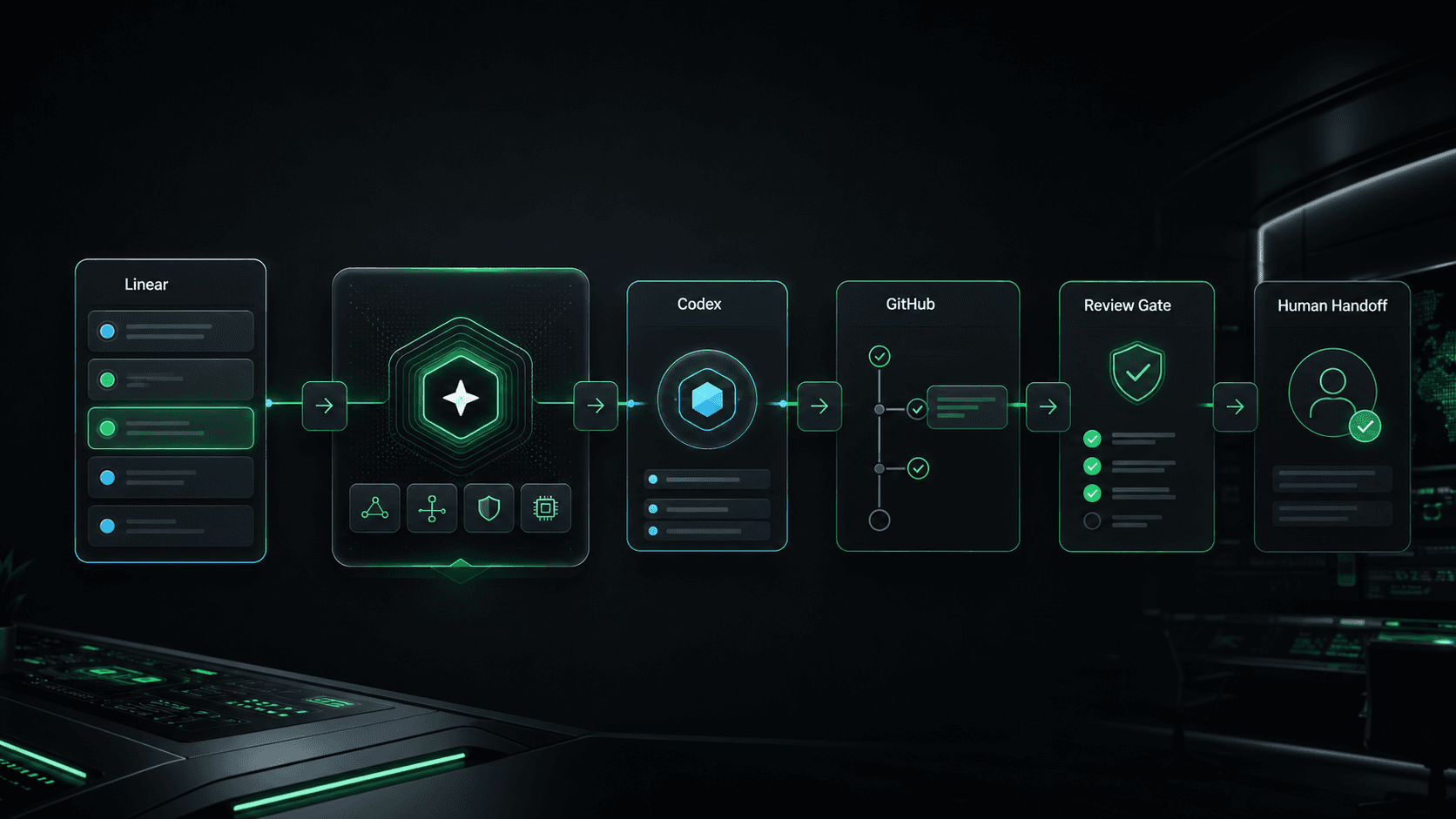
Executive Summary
This project is a harness engineering system for AI-assisted software delivery. It connects Linear, GitHub, and Codex into a structured workflow that can turn an issue into a branch, implementation run, pull request, automated review cycle, and stakeholder-ready delivery summary.
The value is not simply that an AI agent can write code. The value is the operating environment around the agent: issue intake, repository context, branch control, PR creation, review loops, status updates, human handoff, and guardrails. That makes AI-assisted engineering traceable, repeatable, and connected to the systems teams already use.
For any organization that runs engineering work through issue trackers and code repositories, the project demonstrates how AI agents can be embedded into delivery workflows. Humans still steer priorities and make product decisions, while the harness handles repeatable execution, first-pass review discipline, GitHub coordination, Linear updates, and clean handoff.
Key Features
Key product capabilities built around real workflows.
Linear Intake Automation
Receive Linear issue and comment events, filter noisy updates, and decide when automation should start.
GitHub Workspace Preparation
Resolve the target repository, prepare the workspace, create a clean branch, and keep work tied to the correct issue.
Codex Agent Execution
Launch Codex with issue context, repository context, GitHub metadata, Linear metadata, and structured delivery instructions.
Multi-Phase Agent Workflow
Coordinate planner, executor, reviewer, architecture, performance, style, and build/type-check review roles.
Blocking Review Gate
Route work through automated specialist review before human handoff, with a fix loop when reviewers do not approve.
Human-Ready Handoff
Post PR links, delivery summaries, test evidence, status markers, and remaining questions back into Linear.
Introduction
Modern teams do not struggle only with ideas. They struggle with throughput, coordination, and the operational cost of turning tasks into finished work.
A single issue may touch product requirements, design references, repository setup, branch creation, implementation, testing, review, pull request management, status updates, and stakeholder communication. Each step is small on its own, but together they create drag across engineering and operations.
Nousheen Solutions AI built an AI orchestration service designed to close that gap. The system connects Linear, GitHub, and Codex into a structured agentic workflow that can move work from issue intake to PR-ready delivery while keeping humans in control of business judgment and final approval.
The Business Challenge
Many teams already use strong tools, but those tools often operate in silos. Linear tracks work. GitHub manages code and reviews. AI coding agents can assist with implementation. Humans still need to inspect progress, request changes, and decide whether the result meets the business need.
The challenge is orchestration. Without a reliable workflow layer, teams still deal with manual branch setup, repeated status updates, duplicate automation runs, unclear handoffs, inconsistent review gates, and time lost translating issue context into executable implementation steps.
This project addresses that operational layer. It turns AI assistance from a one-off prompt into a repeatable business process.
The Product We Built
The application is an agentic engineering harness: a backend orchestration layer that gives AI agents the context, tools, rules, and workflow structure they need to complete engineering tasks inside the systems teams already use.
At a high level, it listens to Linear activity, resolves the relevant GitHub repository, prepares a working branch, launches Codex with a structured multi-agent workflow, manages pull request handoff, and posts updates back into Linear.
The system includes a Symphony workflow mode that can poll Linear projects, pick up candidate issues, run controlled agent sessions, enforce multi-phase execution, and produce delivery documentation for stakeholders.
Harness Engineering Context
OpenAI has described harness engineering as the work of building the scaffolding, feedback loops, repository knowledge, tool access, and control systems that let Codex agents do reliable work while humans steer intent and validate outcomes.
That framing maps directly to this project. The product does not simply call an AI model. It creates the operating environment around the model: issue intake, repository context, branch control, pull request creation, review loops, status updates, human handoff, and guardrails.
The result is a practical operational harness for AI-assisted engineering delivery, built around the tools and policies a team already uses.
How It Works
A user creates or updates a Linear issue. The issue contains the work request, description, labels, and sometimes links to GitHub or design references.
The orchestration service receives the Linear event and determines whether it should run. It filters out irrelevant or noisy events, such as attachment updates, terminal workflow states, and automation-generated comments.
When the issue is valid, the system resolves the GitHub repository. If Linear and GitHub metadata are not yet synced, the service can defer the run instead of failing, then pick it up later when the repository data becomes available.
Once the repository is known, the system prepares a workspace and branch. It passes the issue context into Codex along with structured workflow instructions. The AI workflow moves through planning, implementation, testing, documentation, PR creation, and specialist review. If review fails, the agent fixes the issue and re-runs the relevant review steps.
When the work is ready, the system posts a Linear summary with branch, PR, delivery notes, test evidence, and session status. The output is a business-ready handoff: a pull request, a Linear update, a delivery summary, and a clear indication of what still needs human judgment.
Why This Demonstrates Our Capability
This project is a strong example of how Nousheen Solutions AI turns AI into practical business infrastructure.
The system reflects a deep understanding of how teams actually work: tasks live in Linear, implementation happens in GitHub, AI needs repository context, leaders need visibility, and humans still need final authority over business decisions.
The project also shows capability across several important service areas: agentic workflows, business process automation, tool integration, custom orchestration, status reporting, and human-in-the-loop systems. These are the building blocks enterprise teams need when they want AI to improve execution, not just generate text.
Future Opportunities
- Dashboard for active automation runs, failed runs, PR status, and review outcomes.
- Analytics on time-to-PR, automation success rate, review loops, and issue throughput.
- Slack notifications for PR-ready, blocked, failed, or completed automation sessions.
- Email summaries for executives or non-technical stakeholders.
- Fine-grained policy controls by repo, team, issue label, or workflow state.
- Additional human approval checkpoints before pushing, merging, or changing workflow states.
Proof Points
- Linear webhook intake for issue and comment-driven automation.
- GitHub repository resolution, workspace preparation, branch creation, and PR discovery or creation.
- Codex execution with repository, issue, branch, and workflow context.
- Multi-phase AI workflow with planner, executor, reviewer, and specialist reviewers.
- Blocking automated review loop before human handoff.
- Linear comments for PR readiness, change summaries, virtual review completion, and session-end status.
- Safeguards against duplicate runs from automation comments, noisy issue updates, attachment events, and terminal workflow states.
- Symphony polling workflow for project-level issue automation.
- Configurable workflow states, branch naming, repository targeting, retry behavior, and delivery posting.
- Figma-aware design-to-code guardrails for UI implementation tasks.
- Delivery reports and artifact paths for screenshots, recordings, tests, and review outcomes.
- Human-in-the-loop model that reserves product and business judgment for people.
Build Something Similar
Turn AI into a working automation layer across your business tools.
Nousheen Solutions AI can help design and build a system tailored to your workflows, data, channels, and operational guardrails.
Build an AI Delivery Harness